Technology-assisted, human-led clinical research operations.
Piligrim is developing a proprietary platform to make protocol-driven work more traceable, complete and operationally visible—without replacing investigator judgement or sponsor oversight.
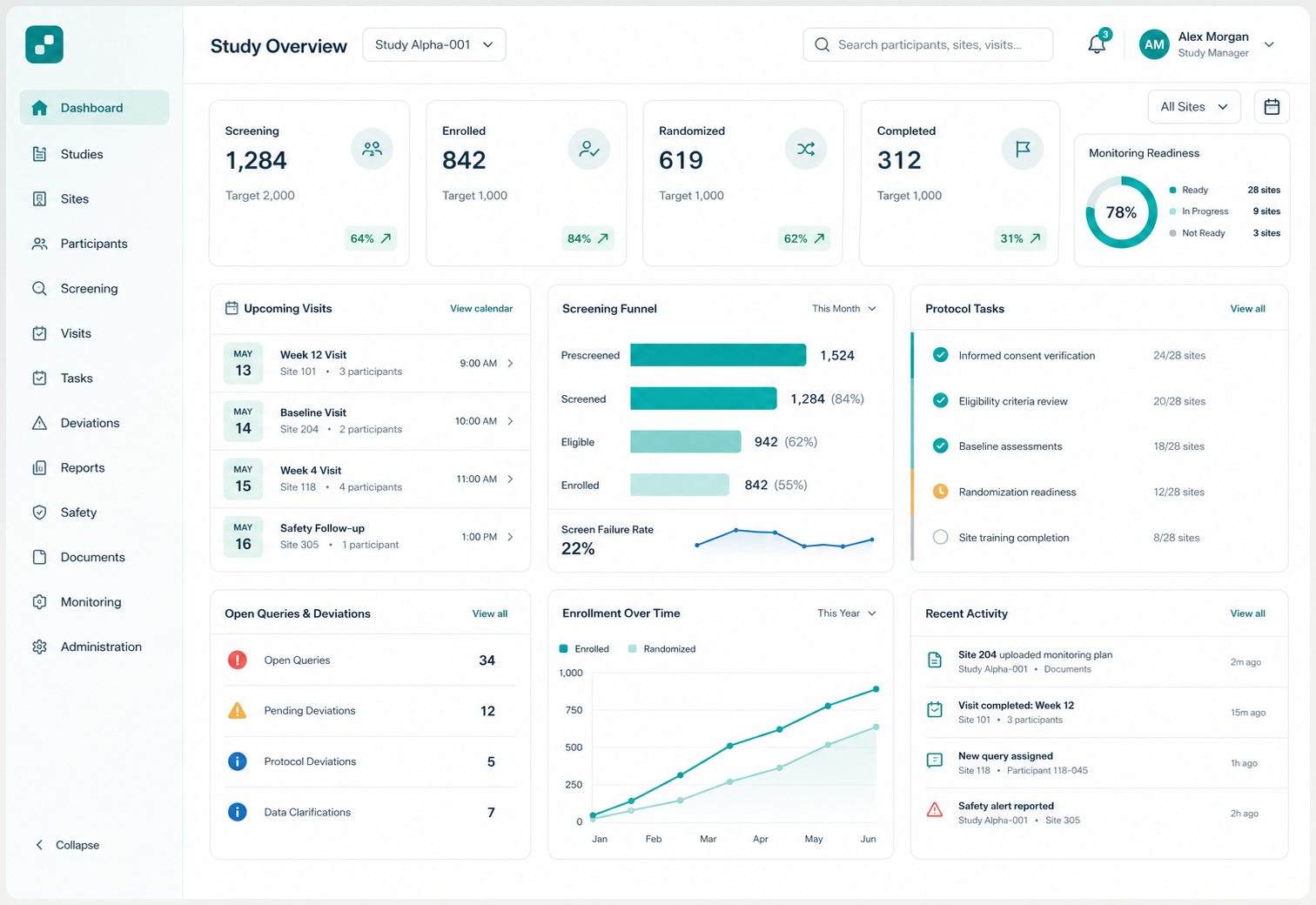
Current status
The platform is under active development and internal pilot implementation. It should not be presented as a validated production system or as automatically compliant with every sponsor, jurisdiction or regulatory framework.
A protocol-driven operating layer designed around traceability and controlled access.
Role-based access
Access is designed around study role, purpose and assigned responsibility.
Audit trail
Relevant changes are intended to remain attributable, time-stamped and traceable.
Protocol configuration
Visits, windows, procedures, forms, eligibility and financial rules are modelled as structured configuration.
Data separation
Personally identifiable information is designed to remain separated from clinical and operational data where appropriate.
AI supports review and coordination. People remain accountable.
The platform roadmap includes AI-assisted protocol structuring, recruitment support, completeness checks, deviation signals and reporting.
Human review is required for
- Eligibility and enrolment decisions
- Safety assessment and reporting
- Medical judgement and patient care
- Protocol deviations and corrective actions
- Electronic signatures and final approvals
From protocol intelligence to reporting and monitoring readiness.
Study & patient workflows
Study configuration, patient records, consent guards, screening and enrolment pathways.
Visits & source
Visit scheduling, dynamic forms, source-document support and completeness checks.
Quality & compliance
Queries, deviations, issue follow-up and monitoring-oriented visibility.
Safety support
Structured assistance for safety workflows without autonomous medical decisions.
Finance
Visit-linked financial events, reconciliation support and multi-currency reporting.
Reporting
Operational dashboards, exports and AI-assisted summaries with human verification.
Confidentiality by design
Protocol and study data may remain confidential even after names are removed. The development approach therefore distinguishes local-only processing, redacted external processing and specifically approved external processing.
- Minimum necessary data
- Stable placeholders and local mapping
- Fail-closed handling when redaction is uncertain
- Contract and sponsor restrictions remain decisive
Quality framing
The product and site workflows are being designed around ICH-GCP principles, traceability and sponsor expectations. This is not the same as a blanket claim of regulatory compliance.
- Study-specific setup and qualification
- Documented validation where required
- Controlled changes and versioning
- Training, roles and responsibility records
- Sponsor acceptance for applicable use
Does the platform make eligibility decisions?
No. It may help structure criteria and surface relevant information, but investigators and authorised study staff make the decision.
Is the platform already validated?
Not yet as a general production claim. Validation and qualification must match the intended use, study context and sponsor requirements.
Does “AI-assisted” mean patient data is sent to external models?
Not automatically. Processing mode depends on confidentiality, consent, contracts, data minimisation and approved technical controls.
Does the platform replace the sponsor’s systems?
No. It is intended to support site operations and can be configured around the sponsor’s required interfaces and source-of-truth systems.
Explore the operating model behind the technology.
We welcome discussions with sponsors, CROs and potential pilot partners.